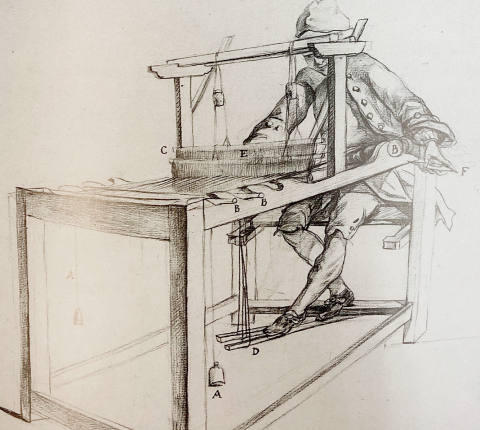
Willis Barshied Jr collected the textiles woven by his neighbors in the area of Stone Arabia New York. The collection is from the Palatine German culture dating from the 18th century through the early 19th century. This collection of textiles a unique look at everyday fabrics hand spun and hand woven in a radius of 40 miles.
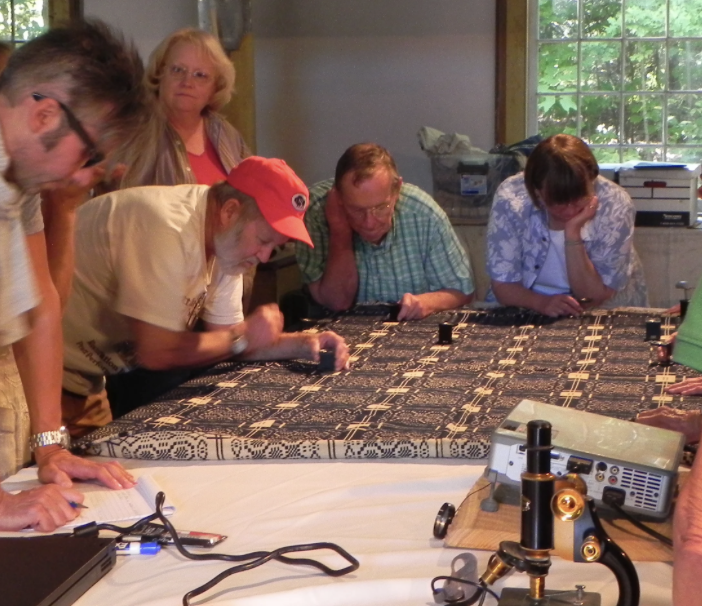
Join Rabbit Goody for a weekend of exploration of these textiles learning how to identify and date towels, sheets, coverlets, and clothing fabric that have been stored in the White House at Kilts Farm, Stone Arabia, New York since Skip collected them. This is truly an opportunity to see, examine, date, and catalogue this very special collection.
Included will be the sharing of letters from Hannah Hayden and her family about living and producing textiles in another area of New York State, Hartwick, and Springfield in Otsego County.
Hannah’s letters are extremely details and give us specific information about what her family was spinning, weaving, eating, and the trade of her husband as a clothier. The letters reveal economic history of the world as the Hayden’s knew it, and the interpersonal relationships between families that provided for each other. Rarely do we have such detailed information about everyday life and hand production that at times was a world of scarcity and at others one of richness. Hezekiah and Strong Hayden were early settlers and brought blue dyeing, fulling and cloth finishing to their area of rural New York.
The two-day workshop includes lunch and all tools for dating and identifying, hand outs, and copies of excerpts from Hannah. Students are encouraged to bring coverlets and other textiles from their collection for identification.

.webp)
.webp)